
Crimsafe Impact Testing
Crimsafe outperforms the rest
We go above and beyond to set the highest standard for security screens in Australia. Crimsafe passes or exceeds standards for impact, jemmy and knife-shear testing to ensure our screens provide the highest level of protection against intruders. In addition, Crimsafe security screens are energy efficient, corrosion resistant, filter UV rays and provide fire attenuation protection. Explore our results and see how Crimsafe protects your family, and how we compare to our competitors.
Superior strength against impact
The first impact delivered by an attacker is usually the most violent. Dynamic impact testing measures how well a security screen holds up to the full force of a criminal’s kicks, punches or charges. The force of impact is measured in ‘joules’.
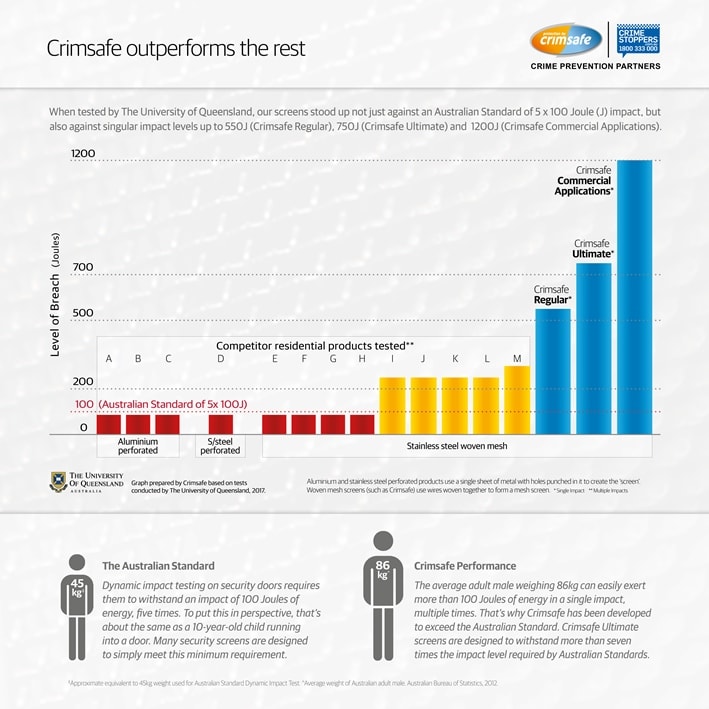
When tested, Crimsafe screens stood up not just against an Australian Standard of 5 x 100 joule impact – but against singular impact levels reaching 550J (Crimsafe Regular), 750J (Crimsafe Ultimate) and 1200J (Crimsafe Commercial Applications).
The security screen industry refers to ‘Australian Standards’ which include testing for the ability to withstand a certain level of impact. This is relevant to the strength of the security screen and the impact it can withstand in the event of a break-in attempt.
While many security screens ‘meet’ the minimum level of impact required by Australian Standards, Crimsafe has been designed to exceed it.
Independent research conducted by the University of Queensland tested a wide range of security screens. Crimsafe exceeded the impact level required by Australian Standards and far out-performed competitor products, making Crimsafe the strongest stainless steel security screen system on the market.
The Australian Standard (AS5041-2003), sets out requirements for a ‘Dynamic Impact Test’. This simulates the effect of a human impact against a security screen and is measured in ‘Joules’ (a unit of energy).
The Australian Standard requires a security screen to withstand five single impacts of 100 Joules each. This is roughly equivalent to the impact of a young child running into a glass door. This was established in the Australian Standards for glass (AS1288) and was adopted by the security industry.
The average Australian male, weighing 86kg, can easily exert more than 100 Joules of force in a single impact.
That’s why Crimsafe has been designed to exceed the minimum requirement of Australian Standards.
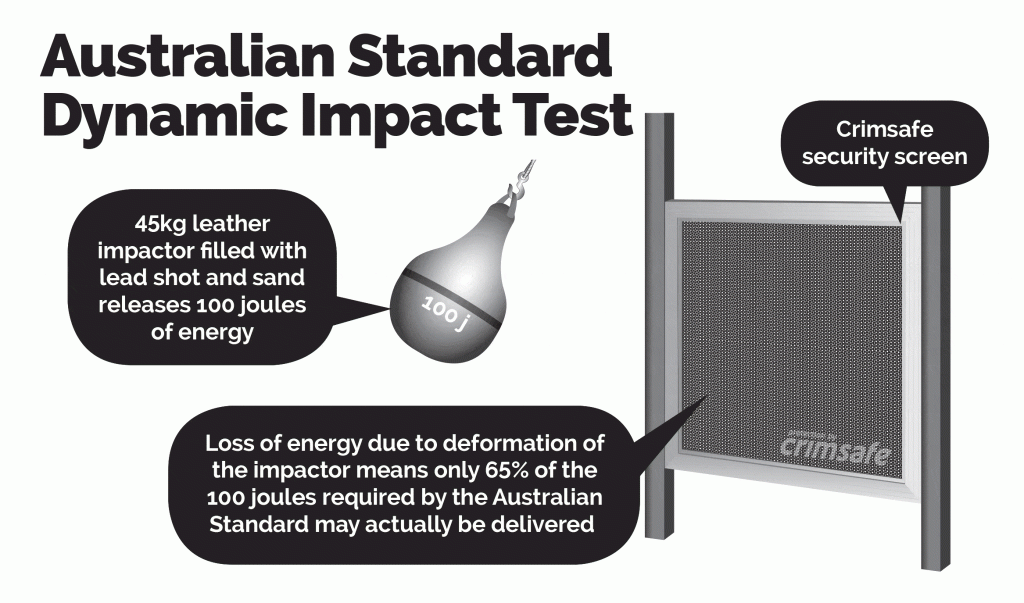
The University of Queensland tested Crimsafe and competitor products for their ability to withstand single and multiple impacts.
The test screens are initially impacted to the level required by the Australian Standards (5 x 100J), after which they are subjected to increasing impact levels. The graph at right shows that many competitor products could not meet the recommended Australian Standard, failing to withstand five impacts of 100 Joules each.
Crimsafe withstood the multiple impacts required by Australian Standards, and withstood a single impact of 550 Joules (Crimsafe Regular), 750 Joules (Crimsafe Ultimate) and 1200 Joules (Crimsafe Commercial Applications).
Resistant to knife attack
Home intruders will often attempt to slash security screens with a blade to gain access to your home. All Crimsafe screens easily pass the Australian Standard Knife Shear Test, because all Crimsafe screens come equipped with our unique Tensile-Tuff® mesh – the industry leading 0.9mm, 304 grade high tensile structural grade stainless steel security mesh.
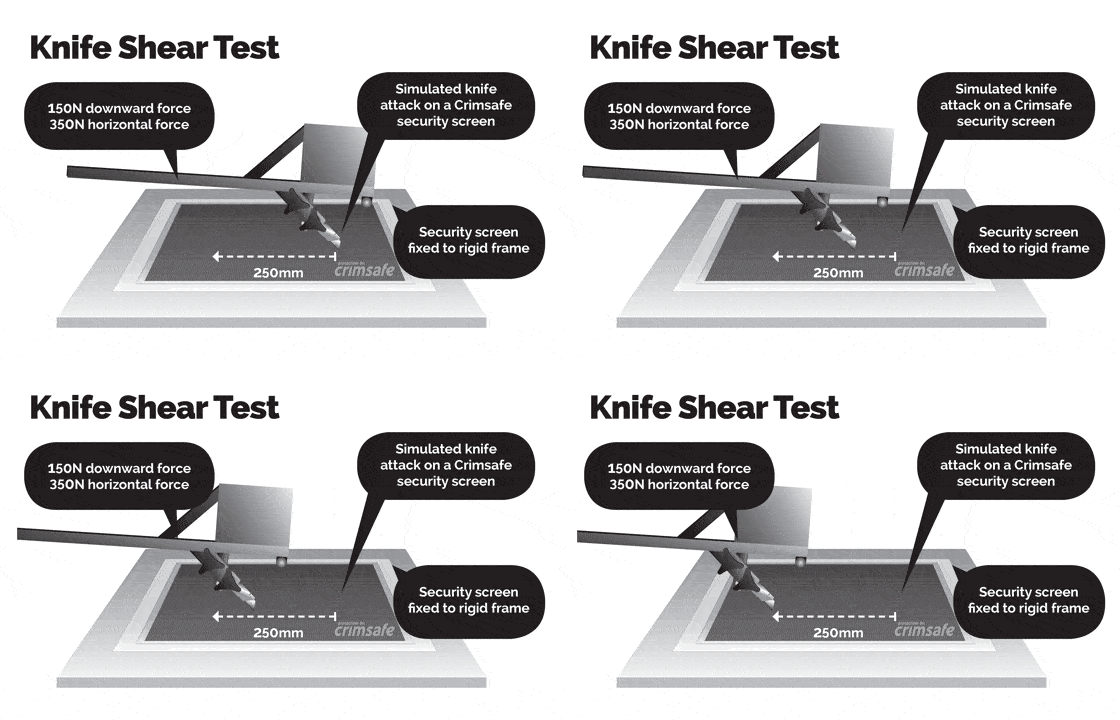
This test is designed to simulate a knife attack on a screen, using the kind of small to medium blade favoured by home intruders.
A test screen is mounted horizontally in a rigid frame and a heavy duty trimming knife is pulled along the mesh with a force of up to 350N (35kg) and a constant downward pressure of 150N (15kg) for a distance of 250mm.
The test is performed three times along the same line with a new blade fitted each time. In order to achieve a pass the mesh must not be penetrated in a continuous line for more than 150mm.
The Results
With our industry leading 0.9mm, 304 grade high tensile stainless steel Tensile-Tuff® mesh, all Crimsafe screens pass this test.
The specifications pertaining to the mesh and other products that we supply are our target specifications. The actual specifications for items supplied may differ taking into account reasonable manufacturing tolerances.
No leverage for tooled attack
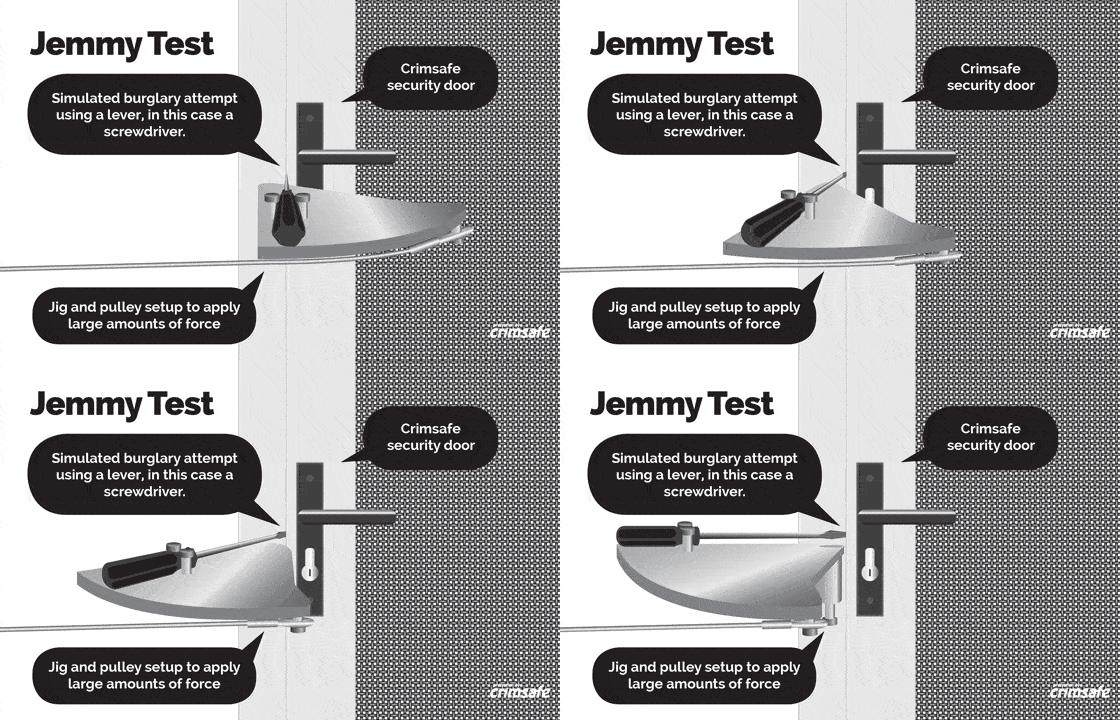
Lever tools (like screwdrivers) are popular among home invaders because some security screens have weak points in their construction – making it easy to lever apart the frame, lock or hinges.
But they’re no match for a Crimsafe screen. Years of development and rugged construction mean that all Crimsafe products meet Australian Standards in every section of the lever attack or jemmy test.
The Australian Standard requires a rotational force of up to 450N (45kg) to be applied and held for 20 seconds at all locking, hinging and fastening points around your security screen.
A large screwdriver is inserted at these points and mechanically rotated until either the force required or 80° rotation has been achieved. A security screen door must remain securely locked and a window security screen must remain securely fastened to the window that it is covering to achieve a pass.
The test panel fails if all the hinges, or all the locking points or all the fastening points (screws holding a window section onto the wall) fail, or if the edge of the security door or window has deflected to make a gap wider than 15cm.
The Result
Crimsafe passed easily and meets the Australian Standard requirements. Our ongoing research in this area has enabled us to develop Crimsafe Ultimate, our product range with true lever defiant design to give you the ultimate protection.
An energy efficient solution
The Australian Window Association (AWA) estimates 40% of a home’s heating energy is lost through windows and up to 87% of a home’s heat is gained through windows.
And with electricity prices rising, choosing energy efficient fittings has never been more important.
Crimsafe screens have undergone a range of energy efficiency testing and have been shown to improve the energy efficiency of a window by up to 53%.
When you choose Crimsafe, you’ll not only stay safe and look smart, but you’ll save money on your energy bills too.
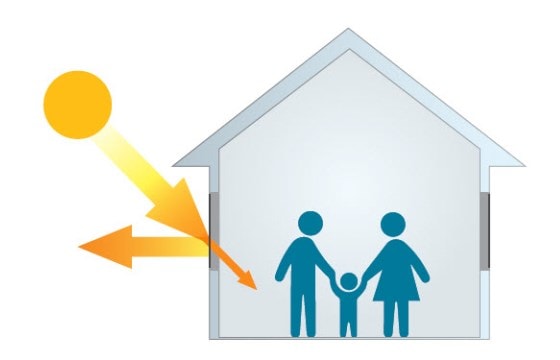
A major element of determining a window’s WERS (Windows Energy Rating Scheme) rating is its Solar Heat Gain Coefficient (SHGC). The SHGC is the measure of how well a window blocks heat caused by sunlight.
To test this, a Crimsafe security screen is applied over a glazed window to measure how well the screen blocks heat produced by sunlight entering into your home.
The Results
Crimsafe Security Screens were found to improve the energy efficiency of a Window by up to 53%.
When Crimsafe is applied over a 3mm generic single glazed window the cooling efficiency of the window increases from zero stars to a 3 Star cooling rating, keeping your home cooler in summer and reducing heat loss in winter.
The Window Energy Rating Scheme (WERS) recognises that Crimsafe improves the cooling and heat retention of a building when applied to glass windows and doors.
The effects are best seen when security screens are placed over your entire window, not just over the opening portion. The type of window glass and glazing will also impact cooling and heat retention.
When Crimsafe is applied over a generic single glazed window the cooling efficiency of the window increases from zero stars, no additional benefit to a 3 Star WERS rating with a reduction in solar heat gain of up to 53%, keeping the interior of the home cool in the summer.
In the winter months Crimsafe works with your windows to limit the escape of warmth from your home, and heat retention efficiency increases. The heating rating improves from zero stars no heat retention benefits, to a 1.5 Star WERS rating with Crimsafe applied.
When Crimsafe is applied over 6.38 Clear Low E glass, the cooling rating increases from a 1.5 Star rating to a 4 Star rating greatly enhancing the cooling attributes of your glazing investment.
Annual energy performance (stars and % improvements) are calculated using Nationwide House Energy Rating Software according to procedures of WERS 2008 and the results are presented in Standard International Units.
For a detailed breakdown of WERS rating results – click to download the PDF
No corrosion under harsh conditions
Over time, some steel security screens can be overcome by the demands of coastal or harsh environments, sacrificing both their protective strength and the aesthetics of your property.
Crimsafe screens have passed corrosion tests above and beyond normal industry standards.
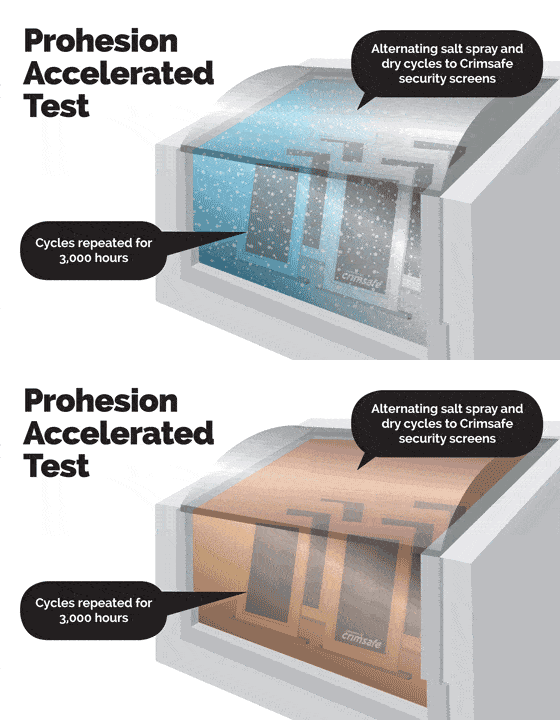
Which is why we put Crimsafe screens through comprehensive corrosion testing – the Australian Standard Salt Spray Test (AS 2331.3.1), and even more rigorous Prohesion Accelerated Test (ATSM G85).
And where other screens fell down, we passed every test with flying colours, meaning your Crimsafe screens will look great and stay strong for longer.
A 1,000 hour salt spray test is a common measure for corrosion in stainless steel security products. This is equivalent to approximately 10 years environmental exposure. Crimsafe passed this test, but also passed a much tougher test – 3,000 hours in the Prohesion Accelerated cyclic test. That’s equivalent to 30 years environmental exposure.
In the industry standard Salt Spray Test, a salt solution is sprayed at the test samples for 1000 hours, simulating 10 years of exposure to very harsh weathering conditions. (AS 2331.3.1)
The Results
The Crimsafe security screens tested passed a massive 3000 hours with no corrosion, our Tensile-Tuff® security mesh passed 10,000 hours with no corrosion.
Crimsafe security screens also pass the Prohesion Accelerated test (ATSM G85), which provides a better correlation with real-world outdoor exposure results.
Prohesion tests use a method of cyclic accelerated corrosion and are designed to evaluate how well the surface coatings of the Crimsafe screen protect from corrosion.
The Results
Crimsafe passed 3,000 hours with no corrosion.
Resistant to bushfire attack
In recent years, bushfires have caused huge losses of life and property across Australia.
In response, Crimsafe has tested its security screens to meet the highest levels in bushfire protection – BAL FZ.
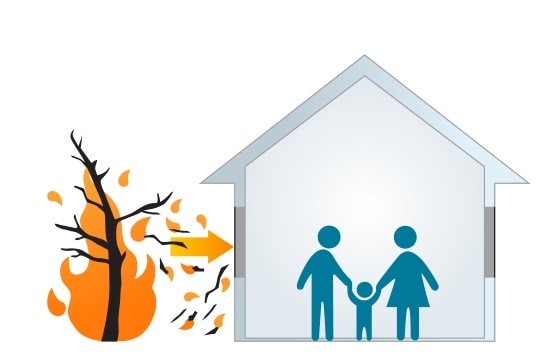
Our screens provide excellent protection from ember attack, reduces radiant heat and will protect glass from the impact of burning debris.
The Australian Standard (AS3959-2009) requires screens which cover openings to be made of corrosion resistant steel, with an aperture size that will not allow a circular probe of 2mm diameter to pass through.
The Results
Crimsafe can protect your home across all Bushfire Attack Levels up to and including BAL-FZ.
Bushfire protection is required on sites where the Bushfire Attack Level (BAL) has been determined as one of the six levels of risk.
Book a free measure and quote
What happens next?


